
How to Create a Relaxed, Effortless Wedding Ceremony

Updated: Sep 10
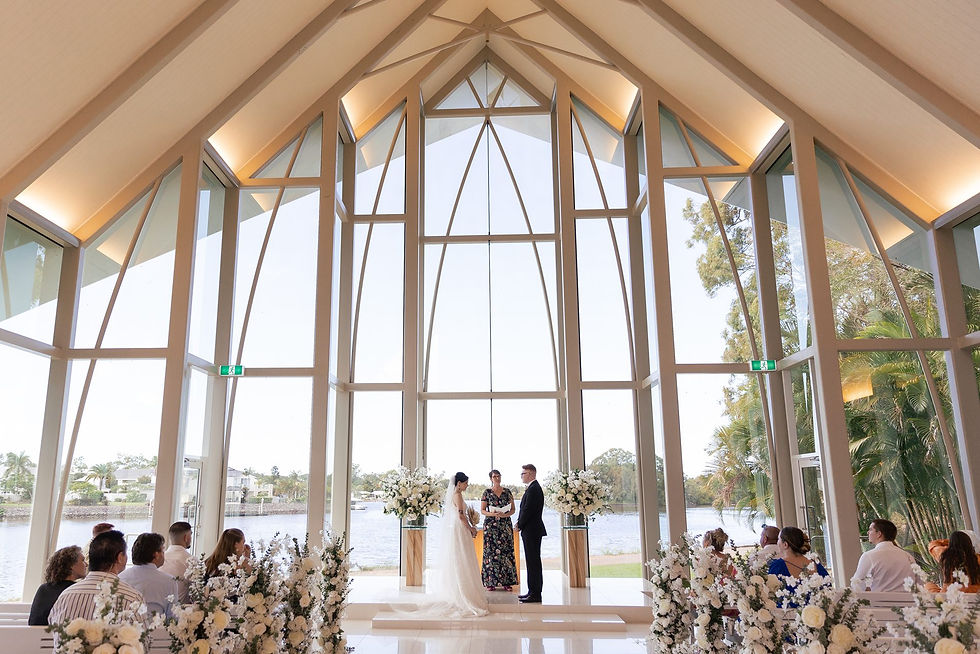
A relaxed wedding ceremony doesn't happen by accident. Here's how thoughtful ceremony design can help you feel more present, comfortable and genuinely celebrated.
One of the biggest misconceptions about weddings is that meaningful means formal. In fact, many couples think a wedding equals formal.
It doesn't.
In reality, some of the most memorable wedding ceremonies are the ones that feel natural, relaxed and completely true to the couple. The moments you remember aren't necessarily the perfectly choreographed or planned ones.
The way you looked at each other when you thought no one was watching.
Something unexpected that made you both laugh.
A few words that weren't in the plan.
A moment where everyone stopped and simply took it all in.
There is a certain amount of freedom within modern wedding ceremony planning that gives you space to curate a moment that is true to you. But there is a difference between structure and rigidity. The balance struck when there is enough structure behind the scenes that you don't have to think about it in the moment. There are things that have to absolutely happen (they are required by law). Likewise, there are things that need to be planned or written in to ensure flow. All of these, when planned and managed well allow you freedom.
You get to be present.
You get to enjoy each other.
And your ceremony gets to feel like you.
Why Weddings Start to Feel Overwhelming
There's a lot of pressure to “get it right” when you're planning a wedding.
Traditions. Expectations. Timelines. Budgets. Guest lists. Suppliers. Opinions from well-meaning family and friends. And suddenly something that is supposed to be about two people getting married can start to feel like a very complicated production. The ceremony can be particularly vulnerable to this because there are so many expectations about what is supposed to happen.
Who walks in first?
Where do you stand?
Who says what?
Do you need personal vows?
Do you exchange rings?
Should someone do a reading?
When do we kiss? Do we have to kiss?
How long should the ceremony be?
Do your guests have to stand?
Do you have to include all the traditional elements?
The answer to many of these questions is simply:
You get to choose.
Your wedding ceremony doesn't have to follow a rigid formula, and when you choose to work with a civil celebrant the breadth of this freedom expands significantly because we are not bound by church, religion or cultural tradition. We get to curate the ceremony to encompass the things that are important to the two of you. You get to decide what is said, and how it happens; your celebrant is there to bring it to fruition and ensure the legal steps and requirements are met.
👉 Wondering what your celebrant actually does? Read more about the role of a wedding celebrant here.
Redefining What “Meaningful” Looks Like
A meaningful ceremony isn't about length, tradition or formality. It's about connection.
It's the way you look at each other.
It's the words you choose.
It's the atmosphere your celebrant creates.
And sometimes it's the completely unplanned moment that nobody could have written into a script.
Maybe one of you gets the giggles.
Maybe a child decides that your ceremony is the perfect time to wander into the middle of it.
Maybe your carefully rehearsed entrance doesn't quite go to plan.
Maybe you both become emotional and need a moment.
These aren't things that need to be “fixed”. They're the moments that make the ceremony feel like you, and real. A good celebrant knows how to allow space for those moments without losing the flow of the ceremony. That's part of the art of creating something that feels effortless and true to you.
Effortless Doesn't Mean Unplanned
This is one of the biggest misconceptions about a relaxed ceremony. Relaxed doesn't mean your celebrant has simply turned up and hoped everything works out.
Quite the opposite.
The more effortless a ceremony feels, the more thought and planning has gone into it beforehand.
A good celebrant is thinking about:
The order of the ceremony
How you'll enter
Where everyone needs to be
Music cues
Your vows
Ring exchange
Readings or rituals
Guest participation
The timing of each element
How you feel standing in front of everyone
If you need a moment to regroup or settle
What happens if something doesn't go according to plan
All of that preparation means that you don't have to carry it on the day. You can simply experience it. This is what I mean when I talk about creating an effortless ceremony.
5 Ways to Keep Your Ceremony Effortless
1. Keep It Concise
Your ceremony doesn't need to be long to be meaningful, and a short ceremony isn't less impactful. A shorter ceremony can often feel more engaging and authentic, particularly when every element has a purpose. The right length is the length that feels right for you.
For some couples, that might be a short, simple ceremony. For others, there may be more story, family involvement, readings or rituals to include.
Registry-style ceremonies are intentionally brief, while elopements and micro-weddings can be tailored around the couple and their guests. The important thing is not to fill time simply because you think a wedding ceremony is supposed to last a certain amount of time.
Every minute should earn its place.
2. Choose Meaning Over Tradition
Tradition can be wonderful when it means something to you. But you don't have to include something simply because it's traditionally done. You can keep the traditions you love and leave the rest. That might include:
How you enter the ceremony
Whether you exchange rings
Whether you have personal vows
Whether you include a reading or poem
Whether your guests participate
Whether you stand, sit or move around during the ceremony
There is no universal checklist for a meaningful wedding ceremony.
Your ceremony should reflect your relationship, not someone else's idea of what a wedding should look like.
3. Make Your Vows Simple (if you are including personal vows)
The idea of writing your own vows can feel lovely in theory and completely terrifying in practice.
You don't need to be a writer. You don't need to produce a perfectly polished declaration of your love. And personal vows are optional. OPTIONAL, so you don't even need to include them.
If you do want to write your own, start with what is true rather than what sounds impressive.
You could talk about:
What you first noticed about each other
What you love about your life together
Something that always makes you laugh
What you admire about your partner
What you hope to bring to your marriage
And if speaking in front of everyone isn't for you, there are other options. You can read from a card. You can repeat short phrases after your celebrant. You can keep your personal vows private, sharing them at first look or during a private moment after the ceremony. If you are including personal vows, the goal is to make your vows meaningful not to turn them into a performance. And, AI can be helpful but the best vows are the ones written by you, from the heart, in your own tone of voice.
4. Create a Clear Flow
Structure removes stress. This is one of the places where your celebrant earns their place.
Your celebrant removes the “What happens now?” They are there to guide you through the ceremony so you know what is happening, where you need to be and what you need to say.
They can also help make sure your photographer, musicians, venue team and other suppliers understand what is happening and when. A clear structure doesn't make a ceremony rigid.
It gives you something to lean on. And when everyone knows the flow, there is more room for those spontaneous moments that make the ceremony feel like yours.
5. Choose the Right Celebrant
This is what ties everything together.
Your celebrant isn't simply the person who says the legal words.
They create the ceremony.
They curate the experience.
They set the tone.
They guide you through the process.
And on the day, they hold the space so you can be fully present.
The right celebrant should make you feel safe.
Your celebrant is there to get you married. To do this they create a moment for that to happen in a way that feels true to the two of you.
Consider what it is you both want the ceremony to feel like. Is it rambunctious and loud (this is your cheerleader, overtly extravert style celebrant) or do you want less overwhelmed, not more (this is more the style my couples book me for, quiet confidence and warmth). Your celebrant delivers the ceremony, so it is important you choose someone whose delivery style feels comfortable to both of you.
And, regardless of the type of personality you choose your celebrant based on, they should be comfortable adapting when the moment doesn't go exactly according to plan which is something you can get a sense of through their social media posts and by talking to them before you make your choice.
What Working With a Calm, Thoughtful Celebrant Looks Like
For me, creating a relaxed ceremony starts well before the wedding day.
It starts with getting to know you. Not just your wedding date and venue, but who you are as a couple and how you want the ceremony to feel.
Some couples want lots of guidance.
Some know exactly what they want.
Some want to keep things incredibly simple.
Others want a ceremony full of personality, stories and involvement from their family and friends.
There isn't a single “right” way to work with a celebrant. My role is to meet you where you are and help bring your ideas together. That might mean helping you decide what to leave out.
It might mean suggesting a different way to approach your vows.
It might mean talking through something you've seen at another wedding and working out whether it actually suits you. And sometimes it simply means saying:
“You don't have to do that if you don't want to.” and suggesting alternatives or other options.
Creating Calm Without Taking Away the Celebration
Calm doesn't mean quiet.
It doesn't mean serious.
And it certainly doesn't mean boring.
A calm ceremony can still be full of laughter, emotion, music, children, friends, family and personality. It simply means the experience has been considered from the perspective of the people actually getting married.
If you don't enjoy being the centre of attention, we can think about how you enter and where you stand. If public speaking makes you uncomfortable, we can find another way to handle your vows.
If noise or crowds are overwhelming, there are ways to make the ceremony more sensory-considerate. If you want your guests involved but don't want a lot of shouting and call-and-response, we can find quieter ways to include them.
And if something unexpected happens?
We pause, breathe and work with it.
Your Celebrant Should Be One Less Thing to Worry About
You've probably already got enough suppliers to coordinate. Your celebrant shouldn't add another layer of stress. They should help remove it.
That means being clear about what happens next.
Answering the questions you don't know you need to ask yet.
Keeping track of the legal requirements.
Helping you make decisions without overwhelming you with endless options.
Being organised behind the scenes.
And being calm on the day.
You shouldn't need to manage your celebrant.
Your celebrant should be managing the ceremony.
The Little Things Matter
Creating an effortless ceremony isn't always about the big decisions. Sometimes it's the little things.
Making sure the microphone is working before you arrive.
Knowing where everyone needs to stand.
Checking the music.
Having your vows ready.
Making sure your rings are where they need to be.
Knowing how to gently bring everyone back if a moment gets a little distracted.
Giving you a moment to breathe when you need one.
These details might not be visible to your guests. That's actually the point.
When the behind-the-scenes work is done well, the ceremony simply feels easy.
The Result
When your ceremony feels effortless:
You're more present
You're less focused on what you're supposed to be doing
Your guests feel more comfortable
The ceremony feels natural rather than staged
The unexpected moments have room to happen
You get to experience the moment rather than perform it
And perhaps most importantly, you get to look back and remember how it felt, not just how it looked. That's what I want for every couple I work with.
Not the “perfect” ceremony.
Not the most traditional ceremony.
Not the biggest or most elaborate ceremony.
A ceremony that feels unmistakably yours.
A Relaxed Ceremony Can Still Be Completely Personal
Sometimes couples worry that choosing a relaxed approach means their ceremony will become generic. It doesn't.
Relaxed isn't a style of script.
It's an approach to the experience.
Your ceremony can still tell your story.
It can still make your guests laugh.
It can still make everyone cry.
It can still include your children, your fur babies, your family, your culture, your traditions and the people who matter most.
It can be deeply personal without being overly formal.
It can be simple without being ordinary.
And it can be calm without losing any of the joy.
Creating a Ceremony That Feels Like You
Ultimately, your wedding ceremony isn't something you need to get “right” according to somebody else's expectations. It's the beginning of your marriage. It should feel like the two of you. It comes with listening, asking the right questions, understanding what matters to you and then curating the ceremony around that.
Sometimes that means more.
Sometimes it means less.
Sometimes it means changing the traditional approach completely.
And sometimes it means keeping things beautifully simple.
The difference is that the decisions are made for you, with you not for the sake of tradition.
Because when the ceremony is thoughtfully designed around the couple, something lovely happens. The structure fades into the background. The pressure eases.
And you have space to simply be there together.
Connected. Present. And genuinely celebrated.
If you're planning a wedding on the Gold Coast, Brisbane or Scenic Rim and want a ceremony that feels relaxed, thoughtful and genuinely you, I'd love to help.


Comments